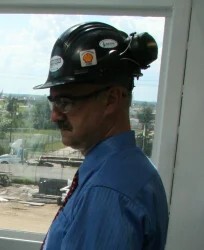
Barton is a Senior Mechanical Engineer with experience in Research and Development as well as Design and Production environments. Hands-on practical experience with 3D CADD and Engineering Analysis (FEA) software ensures that potential design flaws and weaknesses are avoided. Barton enjoys applying traditional engineering to non-traditional applications to help clients find solutions to their unique problems. Fire and Explosion Investigations and Failure Analyses are also areas that Barton has worked in, providing reports that describe technical issues in a way that non-technical readers can understand and follow. Barton has successfully worked in a wide range of industries where he developed the background knowledge to become a valuable team member. The key to success is in working with you, the client, to find an appropriate engineered solution to your problems.
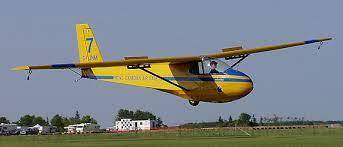
During high school Barton was in Air Cadets, where he earned Top First Year Cadet, a Glider Pilot Scholarship and License, and a Private Pilot Scholarship and License. Barton still flies today and volunteers for Angel Flight Alberta.
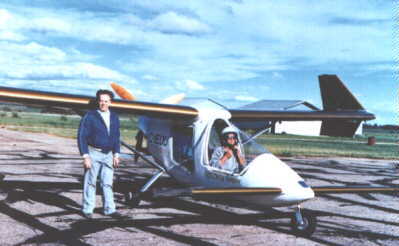
Before graduating from Mechanical Engineering at the University of Alberta, Barton had the opportunity to work for a number of interesting companies, one was designing and manufacturing an ultralight, the Golden Hawk, where he worked as a draftsman.
Another company was designing and building a laser-cutter for the textiles industry, where he worked as a CAD Operator / Mechanical Technologist. He worked on the superstructure, the main conveyor and the auxiliary conveyor, the x-y positioner and components of the laser beam delivery system. It was in designing the flying mirror mount of the beam delivery system that it became apparent to Barton that he needed to get a Mechanical Engineering Degree.
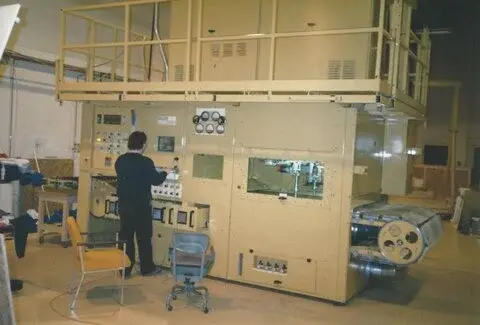
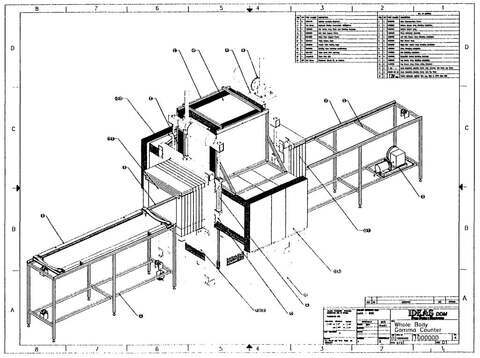
While attending University, Barton worked with a physics student that was working on his doctoral thesis, developing a Whole Body Counter to detect the location of cancer in patients. A cancer patient would be injected with a radioactive isotope which would be absorbed by the cancer cells. The patient would then be scanned with the Whole Body Counter to detect the location of the radiation, and thus the location of the cancer.
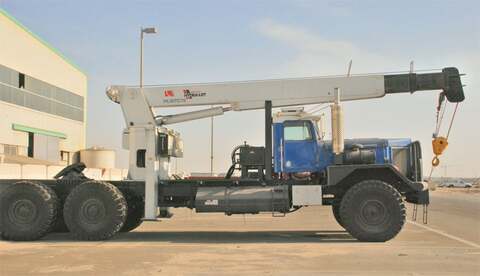
After graduating from University Barton went to work for a local manufacturing company that had just purchased a Crane Manufacturer from Eastern Canada, and was moving its operations to Edmonton. Here Barton was helping in getting the Crane Department set-up, as well as filling customer's orders.
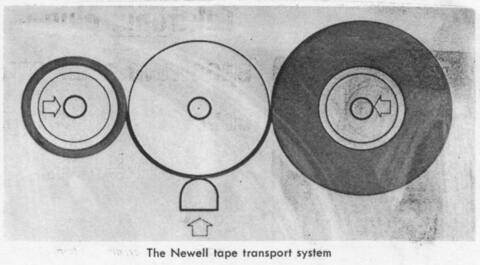
Not long after that, based on his experience in Research and Development Barton was hired as the Mechanical Engineering Manager for a small R&D company that was developing a computer mass storage unit using an Optical Tape Cartridge. The cartridge was capable of storing large amounts of data, while also having very fast access times and data transfer rates. The President of the company, Mr. Ches Newell had many patents and was looking to prepare Mass Storage Systems for companies like NASA, Compaq, and Disney. Unfortunately before the project was completed Mr. Newell passed away. Here is some background information on Mr. Ches Newell and the Opticel project.
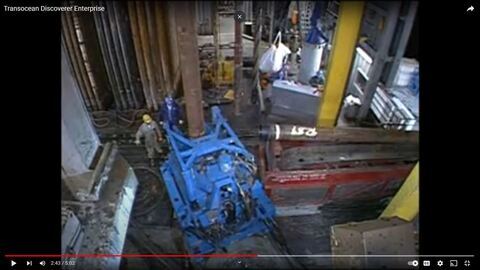
Barton then went to work for Farr Canada, a subsidiary of McCoy Brothers in Edmonton, that built hydraulic power tongs for the Oil and Gas Industry. His first design task was to develop a scissor lift that would operate between well center and the mousehole of a drill ship, and could carry either a 14" or 20" tong and back-up. This can be seen in the YouTube video link below, at 2 min 46 sec.
Eventually Barton was involved with designing a 14"-130,000 ft-lb continuous torque tong, back-up and scissor lift for use with interference thread drill pipe.
It was during this time that Barton became comfortable in a production machining and fabrication setting where clear concise parts and assembly drawings eliminated mistakes and minimized re-work which is critical to a production company's success. This was possible because the original engineering designs took into consideration the different fabrication processes that were going to be used to fabricate the parts, and which processes were best suited for each part. Dimensioning and tolerancing of the drawings would then be tailored for each different fabrication process.
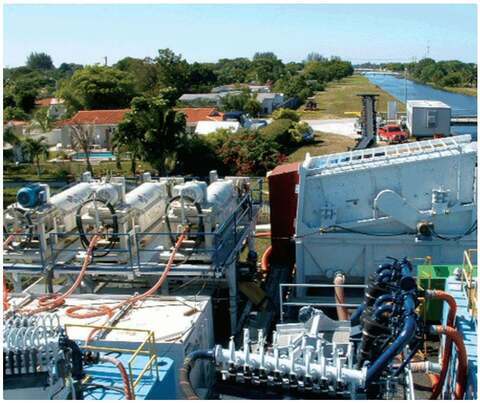
Barton then moved on to work for a company that provided Mobile Contract Dewatering Services across Canada and the United States to Water, Wastewater, and the Pulp and Paper Industries. Large bowl diameter centrifuges, custom designed screening equipment, screwless conveyors and dredges were the main pieces of equipment, with trash pumps, and progressive cavity pumps being some of the additional ancillary equipment. He worked on designing specialized equipment, improving process performance, reducing unscheduled maintenance, and developing an equipment utilization program linked to the periodic preventative maintenance program software. Additionally, specialized projects required new equipment and new equipment configurations to meet both site constraints and sludge characteristics.
Sunset Park Canal required a drainage canal to be dredged to remove sediment, and return the water back to the canal without increasing the turbidity. A project constraint was to have all of the process equipment located on a small area of land located between the drainage canal and the homeowners' properties.
Another project required dredging of the Hylebos Waterway in Tacoma, Washington. Again specialized equipment was designed and build to meet the very tight project performance requirements of the Consulting Engineer's chemical treatment process/ Barton was part of the Trimax team that dealt with some initial contract issues that were encountered during start-up.
Barton them went on to Allan Nelson Engineering and worked as a Senior Mechanical Engineer, and Engineering Manager. Here Barton worked on Equipment Designs and Certification, Level IV Inspections, Damage Assessments with Repair Procedures and Repair Certifications, Failure Analysis, Fatality Investigations and Fire Investigations.
Here are some highlight projects that Barton worked on:
Fire Investigations:
Heavy Duty Truck, Forestry Mulchers, Mobile Doghouse, Pump Jack, Tank Farm with 1000 gal Propane Tanks
Damage Assessments:
Picker Crane after turret fire, Service Rig Roll-Over Damage, Service Rig Mast Raising Damage, Mast Failure Investigation
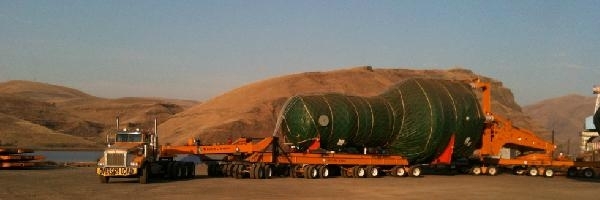
Barton and a fellow engineer then started a consulting engineering company, born by a recommendation as a capable set of engineers that could perform a design review of a Schnable Neck trailer. The trailer had had been designed to transport a very large evaporator vessel that had been built in Asia and shipped to Portland. It was then taken up-river to Lewiston, Idaho. Once on land it was connected to the Schnable Neck Trailer and then driven up to Grande Prairie. Alberta, a trip of almost 1,000 miles.
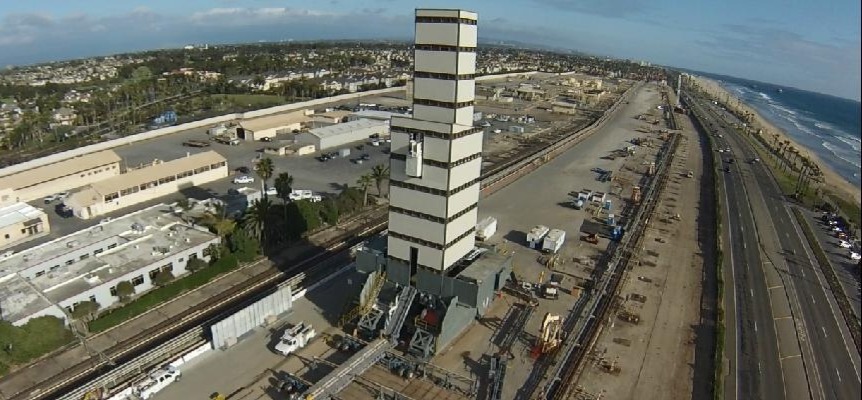
A large project that was completed was the design of a complete drilling rig, complete with a moving system that allowed the rig to "walk" from one location where the well had been finished drilling, and on to the location of the next hole, while still being rigged-up. The design also required the substructure to either straddle the cellar, or to span the cellar, depending on the site configuration. A last requirement was to have the drilling rig covered with urban concealment, which had to be installed in a very short period of time. The rig worked across from Huntington Beach in California.